Yellow Pages Homepage Redesign for Thryv
SUMMARY
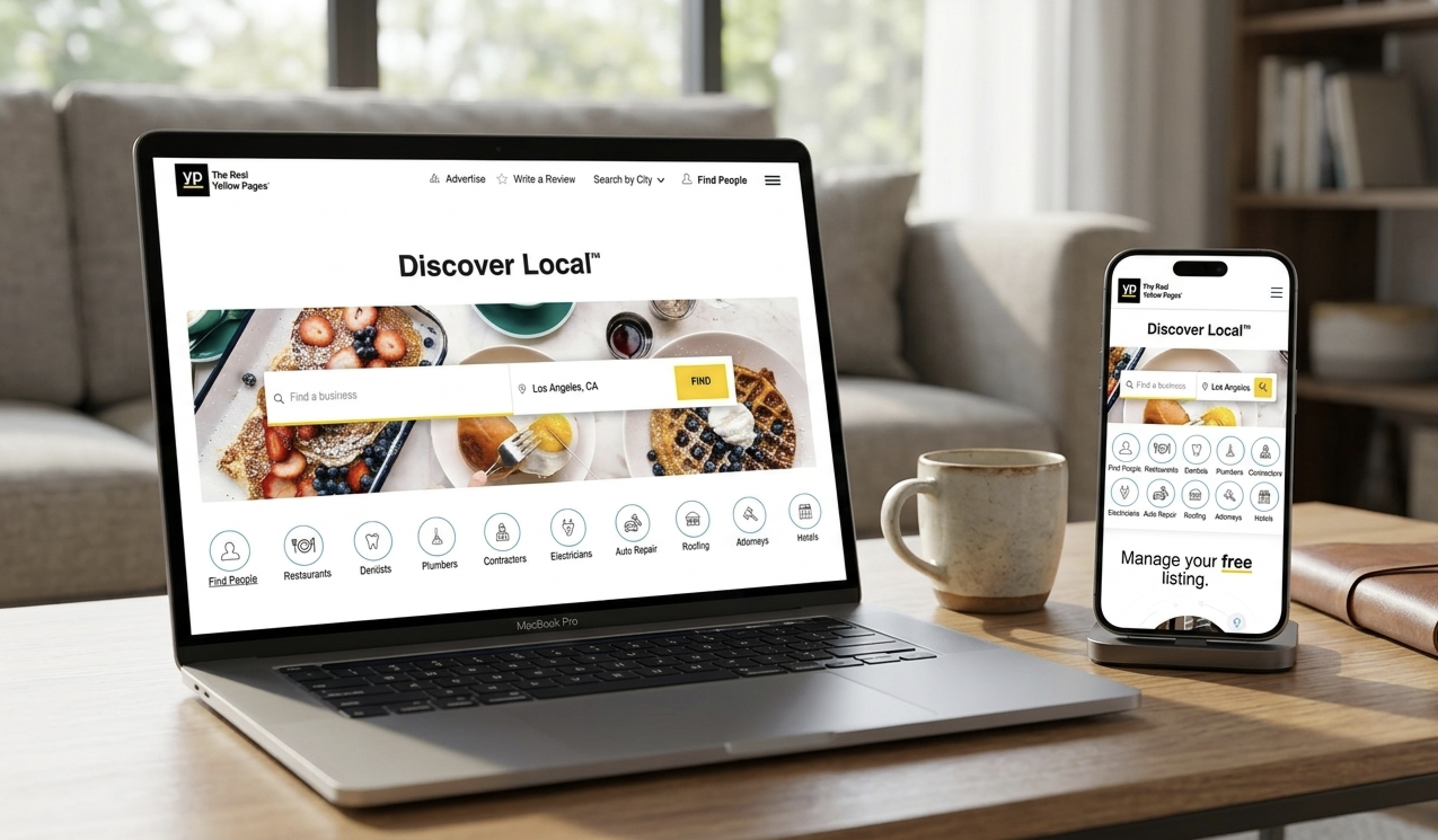
The Yellow Pages homepage was the highest-traffic entry point in Thryv's US directory network, but it was losing consumers to search engines and missing advertiser conversions. I led the full redesign from research through ship, driving a 20% lift in click-through rate and $2.4M+ in annual revenue. Once proven on YP, I rolled the same design system to DexKnows, a smaller US directory brand, applying the learnings without starting over.
Role
Product Designer
Team
1 Designer, 2 Engineers, 1 PM
Timeline
2023 to 2024
Tools
Figma, Sketch, Zeplin, Google Analytics
Skills Used
User research, A/B testing, interaction design, visual design, data-informed design, cross-brand systems
Higher CTR
Annual Revenue
Search Completion
Brands Shipped
How do you modernize a household-name directory homepage that has to serve two audiences at once: consumers looking for a local business, and the small business owners paying to be found?
Act 01
Starting with who the homepage serves.
Every directory is really two products fighting for the same screen. Consumers want to find a plumber in ten seconds. Business owners want the call that pays their mortgage. The research had to hold both in view.
Research · Method
How I listened before I designed.
Wk 1-2
Analytics audit
Six months of traffic, bounce, and CTR data combed for signal.
Wk 3-5
Consumer interviews
Fourteen 45-minute sessions across three US metros.
Wk 5-6
Advertiser calls
Nine small business owners on what makes a listing pay.
Wk 7
Heuristic review
Three competitor directories audited against our patterns.
Wk 8-12
Usability tests
Eighteen sessions across consumer and advertiser flows.
Research · Insights
Three numbers rewrote the homepage.
Insight · 01
Average time to first search
Consumers gave the homepage seven seconds. If the search bar wasn't the first thing they saw, they left for Google.
Insight · 02
Traffic arriving on mobile
Over half the audience was on a phone. Every design started on the smallest screen and expanded up, not the other way around.
Insight · 03
Listings still unclaimed
Business owners didn't know they could claim their own listing. The 'claim' entry point had to be findable without a search.
The homepage had to earn both of them.
Persona 01
Rachel Lim
Consumer · Looking for a local plumber
“If I can't find who to call in the first screen, I'm back on Google in ten seconds.
Columbus, OH · 34 · Mobile first
- →Finds services on her phone between school pickup and dinner
- →Trusts reviews but won't sort through them
- →Wants to tap-to-call, not fill out a form
Persona 02
Dave Vargas
Advertiser · Owns a 2-truck HVAC company
“I pay for the listing. I'd pay more if I knew how to make it work better.
Phoenix, AZ · 52 · Desktop once a week
- →Advertises on YP because his dad did
- →Claims his listing only if the button is obvious
- →Wants 15 minutes a month to manage, not 2 hours
Framing · Principles
Four principles guided every decision.
Search-bar-first.
The homepage exists to start a search. Every other element earns its place by supporting that single action, not competing with it.
Mobile is the default.
60% of traffic is on a phone. Every screen starts at 375px and expands. Desktop is the responsive variant, not the canonical one.
The claim button is a product.
Hiding 'claim your listing' behind three menus cost Thryv real revenue. Surface it wherever an advertiser might land.
One system, three brands.
Yellow Pages, Superpages, and DexKnows each keep their identity. But the component library, interaction patterns, and accessibility rules are shared.
Ideation · What I killed
Three directions that didn't survive testing.
A Google-style homepage with nothing but a search bar.
Too sparseA full-page hero carousel rotating featured ads every five seconds.
Too loudA 'List your business' link hidden in the footer.
Cost revenueA chatbot assistant 'find me a plumber' as the primary entry point.
No trustIdeation · The Chosen Layout
The homepage that made the three changes that mattered.
- 1
Search bar is the only hero element
Nothing else competes for attention in the first viewport. Location auto-detect keeps the task to a single action.
- 2
Quick-select category grid
A one-tap path for consumers who don't know what to type. Replaced a rotating carousel with a calm grid.
- 3
Claim your listing, above the fold
Moved from the footer to the top-right. The single biggest advertiser-conversion unlock.
Act 04
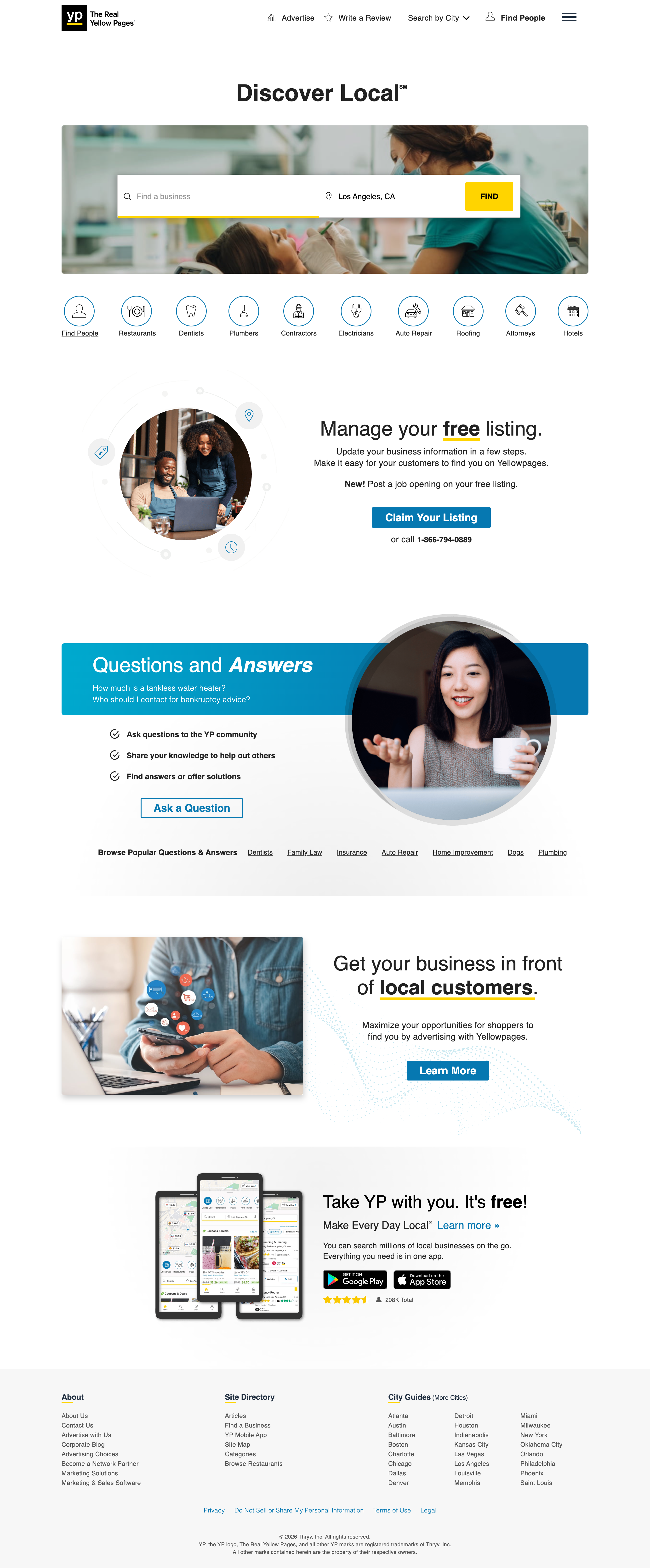
The Yellow Pages homepage.
The old homepage was a cluttered mess of CTAs, banners, and rotating featured content. The redesign did one thing well instead of five things poorly.
KEY DESIGN DECISIONS
Three moves drove the 20% CTR lift: the search bar is the only hero element, quick-select categories give consumers a one-tap path without typing, and 'Claim your business' sits above the fold where 41% of unclaimed advertisers could finally find it.
Mobile responsive.
60% of traffic
Mobile wasn't a scaled-down version. The stack order (search bar, categories, claim CTA) held, but every element reflowed for one-handed use. The claim CTA moved from top-right to a persistent row near the top. Category grid collapsed from 6-across to 3-across. Search input grew to fill the width.

Act 05
Then we shipped it again.
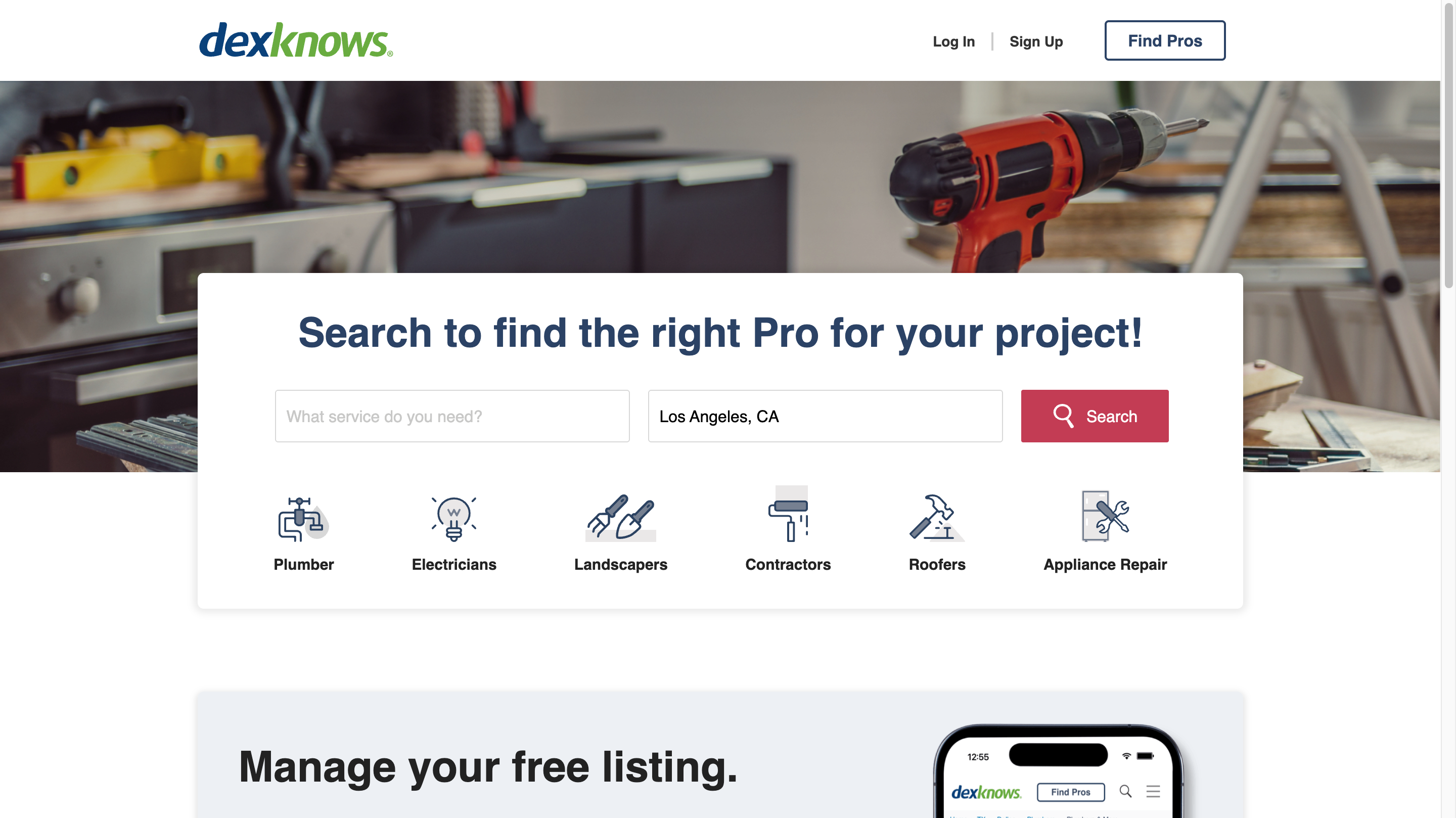
Once the YP homepage was proven, I applied the same playbook to DexKnows, a smaller US directory brand in the same network. Same search-first layout, same category grid, same above-the-fold claim CTA, adapted to DexKnows' own brand identity. The shared component library did the heavy lifting. No starting over.
WHY THIS MATTERS
Proving a design on one brand and rolling it to another without re-doing the work is the measure of a system that works. DexKnows shipped in a fraction of the time YP took, with the same conversion-focused layout mapped to a different brand voice. One playbook, two brands shipped.
Act 06
The system shipped on mobile too.
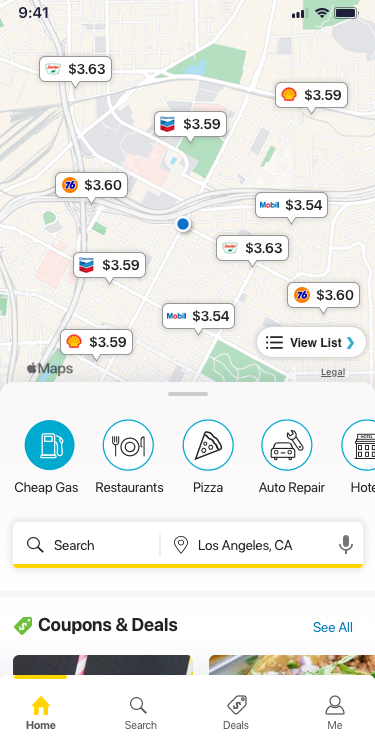
The same design philosophy, the same conversion-focused hierarchy, applied to the Yellow Pages native app. Search-first layout, category-led discovery, and a streamlined claim flow for business owners managing their listings on the go. Shipped on iOS and Android.

Act 07
Reflections
Reflections
What I Learned
SYSTEMS SHIP FASTER
Rolling the same design to DexKnows after proving it on YP took a fraction of the effort. The component library did the heavy lifting, brand identity came in as paint, not structure.
SMALL NUMBERS MOVE BIG ONES
The 20% CTR lift and $2.4M in revenue didn't come from one big redesign. They came from dozens of small A/B-tested decisions, each earning a few basis points at a time.
TWO-SIDED DESIGN IS A NEGOTIATION
Designing for consumers AND advertisers meant every layout was a trade-off. The 41% unclaimed listings stat was the unlock, it gave both sides a shared win.
DATA TELLS YOU WHERE, USERS TELL YOU WHY
Analytics showed the problems. Interviews explained the behavior. Shipping the right thing needed both, neither alone was enough.